
3D Printing vs CNC Machining: Which Is Better for Prototypes?
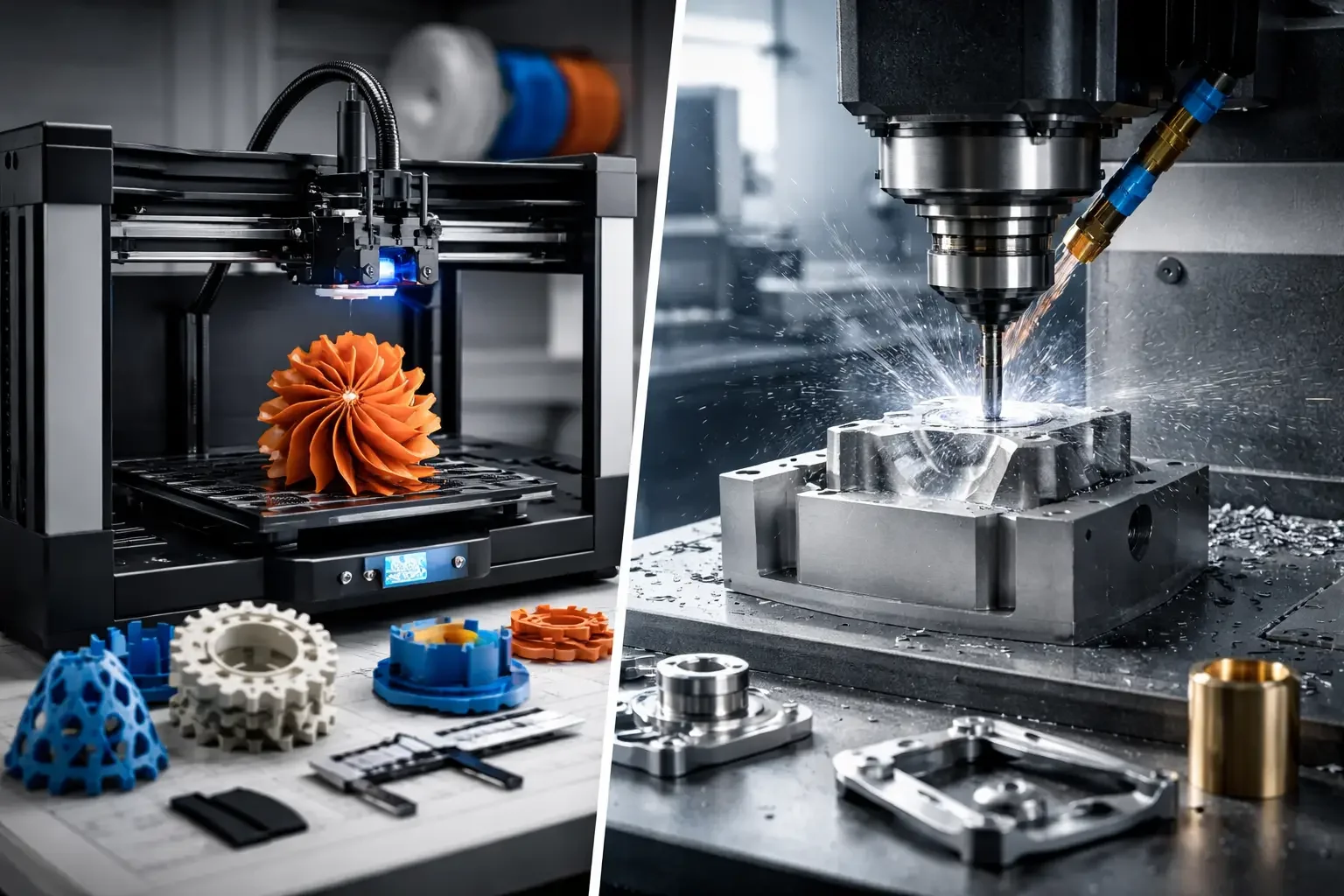
Product development has changed dramatically in the last decade. Engineers, startups, and product designers can now create physical prototypes faster than ever thanks to digital manufacturing technologies.
Two of the most widely used rapid prototyping methods today are 3D printing and CNC machining.
Both technologies allow companies to transform digital designs into real parts, but they work in completely different ways. Understanding the difference between additive manufacturing and subtractive manufacturing can help you choose the best method for your prototype.
In this guide, we compare 3D printing vs CNC machining based on cost, precision, materials, turnaround time, and typical use cases.
Understanding Additive vs Subtractive Manufacturing
Before comparing the two technologies, it helps to understand how they work.
3D Printing (Additive Manufacturing)
3D printing is an additive manufacturing process, meaning material is added layer by layer to build an object.
A digital 3D model is sliced into thin layers, and the printer gradually constructs the part from materials such as plastic, resin, or metal.
Key characteristics:
builds parts layer by layer
minimal material waste
excellent for complex geometry
rapid iteration during prototyping
CNC Machining (Subtractive Manufacturing)
CNC machining is a subtractive manufacturing process.
Instead of building a part, a CNC machine removes material from a solid block using precision cutting tools.
Key characteristics:
material is cut away from a block
extremely precise machining
ideal for metals and functional parts
widely used in traditional manufacturing
3D Printing vs CNC Machining Comparison
1. Cost Comparison
Cost is often one of the biggest deciding factors when choosing a prototyping method.
3D Printing Costs
3D printing is generally more affordable for:
small production runs
complex shapes
early-stage prototypes
low-volume manufacturing
Since there are no specialized tooling costs, designers can quickly produce multiple iterations without significant expense.
CNC Machining Costs
CNC machining can become more expensive for complex designs because:
material waste is higher
machine setup takes longer
tool paths must be programmed carefully
However, CNC machining can be cost effective for parts that require tight tolerances or durable materials.
Winner for low-cost prototypes: 3D printing.
2. Precision and Accuracy
Precision is critical when prototypes need to fit with other components or perform mechanical functions.
CNC Machining Precision
CNC machines are extremely accurate and can achieve tolerances as small as:
±0.01 mm depending on the machine.
This makes CNC ideal for:
mechanical parts
engineering components
aerospace and automotive prototypes
3D Printing Precision
3D printing precision depends on the technology used:
FDM printers: moderate accuracy
SLA printers: very high detail
SLS printers: strong functional parts
Although modern printers are highly accurate, CNC machining still provides the highest mechanical precision.
Winner for precision: CNC machining.
3. Materials Available
Material choice can heavily influence which manufacturing method is better.
Materials Used in 3D Printing
Common 3D printing materials include:
PLA
ABS
Nylon
PETG
Resin
flexible TPU
metal powders (industrial printers)
These materials work well for concept models and functional prototypes.
Materials Used in CNC Machining
CNC machining supports a wide range of engineering materials such as:
aluminum
stainless steel
brass
titanium
engineering plastics like POM or polycarbonate
These materials provide excellent strength and durability.
Winner for material strength: CNC machining.
4. Turnaround Time
Speed is essential during rapid product development.
3D Printing Turnaround
3D printing typically has very fast turnaround because:
minimal setup is required
parts can be printed immediately
multiple iterations can be produced quickly
Many prototypes can be printed within hours or a few days.
CNC Machining Turnaround
CNC machining requires additional preparation:
programming tool paths
machine setup
material preparation
This can increase production time compared with printing.
Winner for speed: 3D printing.
5. Design Complexity
One area where 3D printing excels is geometric complexity.
3D Printing Advantages
Additive manufacturing allows designers to produce:
internal channels
complex lattice structures
organic shapes
lightweight structures
These designs are often impossible or extremely expensive to machine.
CNC Machining Limitations
CNC tools require physical access to cut material, which can limit certain geometries.
Winner for complex designs: 3D printing.
Best Use Cases for Each Method
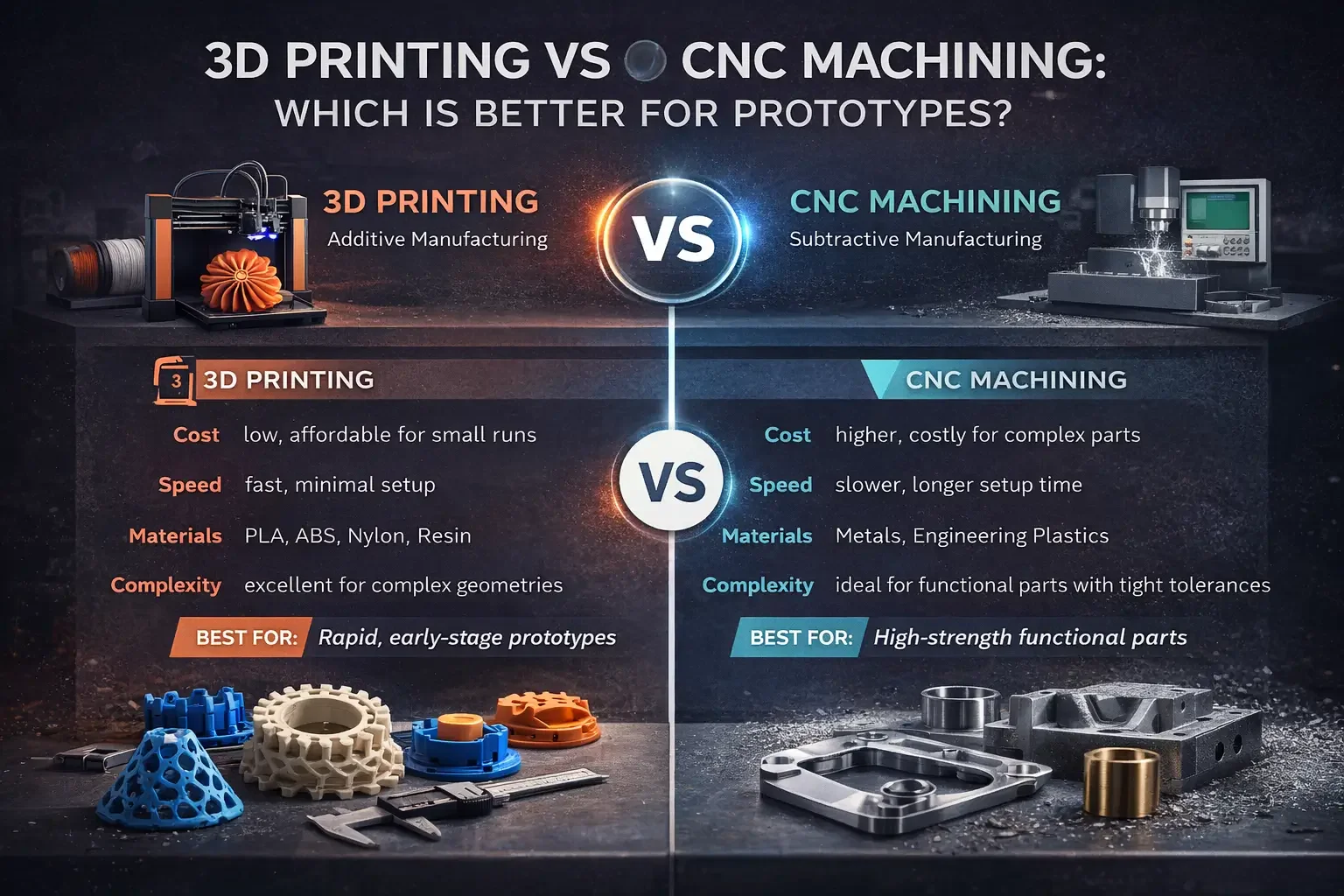
When to Use 3D Printing
3D printing is ideal for:
early-stage prototypes
concept models
complex geometries
lightweight components
rapid design iterations
It allows product teams to quickly test ideas before investing in expensive manufacturing processes.
When to Use CNC Machining
CNC machining is better suited for:
high-strength components
tight tolerance parts
functional mechanical prototypes
metal components
production-ready parts
For prototypes that must behave exactly like final production components, CNC machining is often the better choice.
Can You Combine 3D Printing and CNC Machining?
Many modern product development workflows combine both technologies.
For example:
Use 3D printing for early concept prototypes
Test multiple design iterations quickly
Move to CNC machining for final functional prototypes
This hybrid approach reduces costs while ensuring high quality final parts.
Choosing the Right Prototyping Method
There is no single manufacturing method that works for every project.
The right choice depends on:
prototype purpose
required strength
complexity of design
production timeline
budget
For many startups and product designers, 3D printing is the fastest way to move from concept to physical prototype, while CNC machining is ideal for final testing and functional components.
Get Your Prototype Manufactured
If you're developing a product prototype and need guidance on the best manufacturing approach, working with experienced fabrication specialists can help you choose the right process.
Professional prototyping services can evaluate your design and recommend whether 3D printing or CNC machining will deliver the best results for your project.
FAQ
Is 3D printing cheaper than CNC machining?
For small batches and complex shapes, 3D printing is usually cheaper because it requires less setup and produces minimal material waste.
Is CNC machining more precise than 3D printing?
Yes. CNC machining typically offers tighter tolerances and higher dimensional accuracy than most 3D printing technologies.
Which is faster for prototyping?
3D printing is generally faster because parts can be produced with minimal setup and without machining tool paths.
Can metal parts be 3D printed?
Yes. Industrial metal 3D printing technologies such as DMLS and SLM allow the production of metal components, although these processes are more expensive than plastic printing.
If you'd like, I can also help you create 5 more comparison blogs that will rank extremely well for your London 3D printing business, such as:
When comparing 3D Printing vs CNC Machining, it’s helpful to review the UK government’s insights on advanced manufacturing technologies.