
Revolutionizing Prototyping: How 3D Printing Transforms Product Development
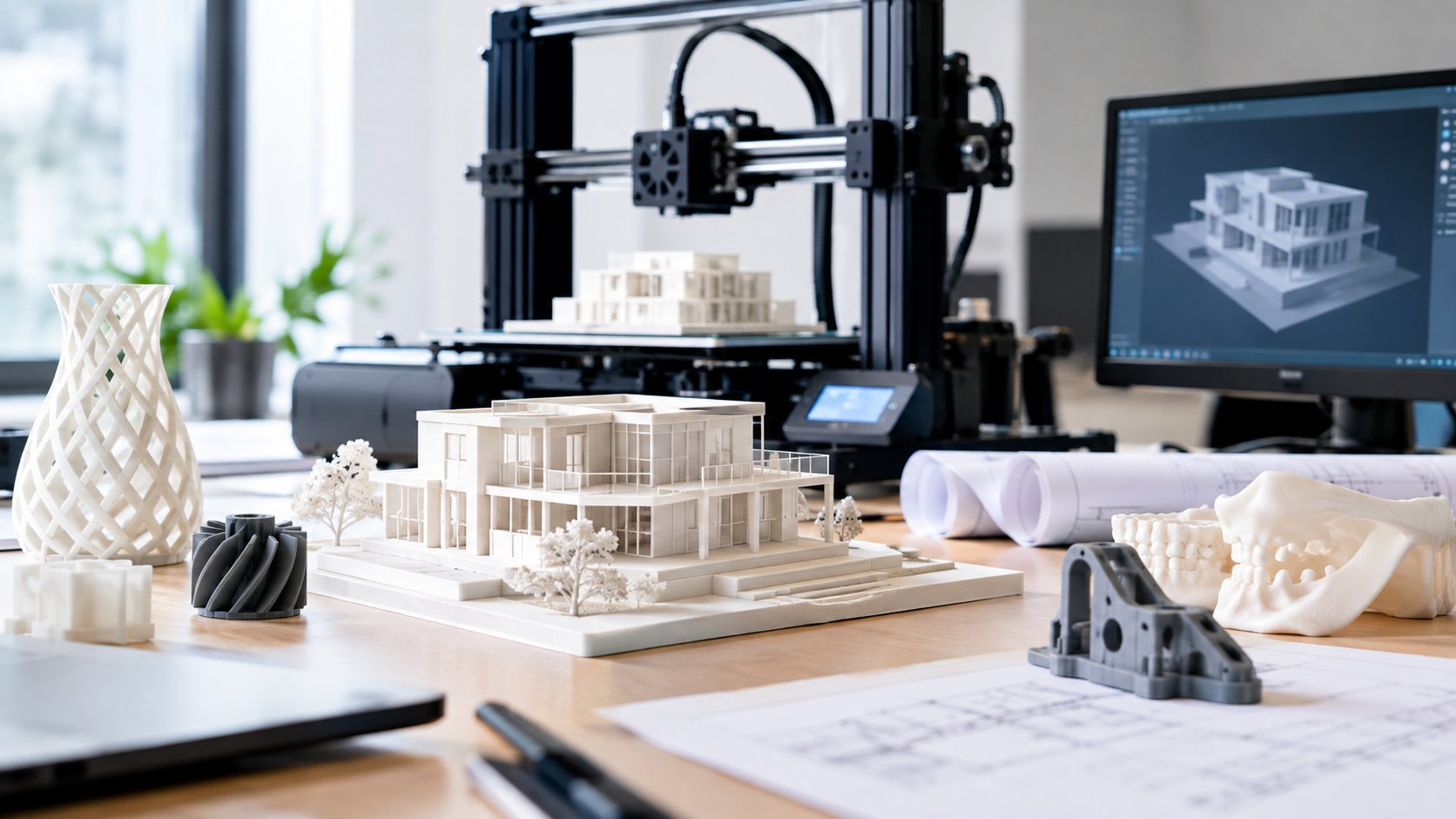
The combination of traditional architecture with cutting-edge 3D printing technologies is reshaping the landscape of product development, particularly in the field of architectural model making. Creating physical models has been a cornerstone of architectural design, aiding architects in visualizing and interacting with their concepts. However, as Dr. Simona Valeriani notes, many architects have had to pivot away from hands-on model making to focus on digital competencies. While computer-generated images and visualizations can effectively communicate design ideas, they often miss the serendipitous discoveries made through physical model making, known as "happy mistakes"
3D printing bridges this gap by offering a means to produce rapid prototypes directly from digital designs. This technology allows architects to create models that showcase intricate details and complex forms that traditional methods cannot easily replicate. Projects can now be built from digital files without returning to 2D drawings, saving time and enhancing creativity. Architectural firms like Make Architects have leveraged multiple 3D printers for continuous design development, enabling them to seamlessly integrate model making into their workflow
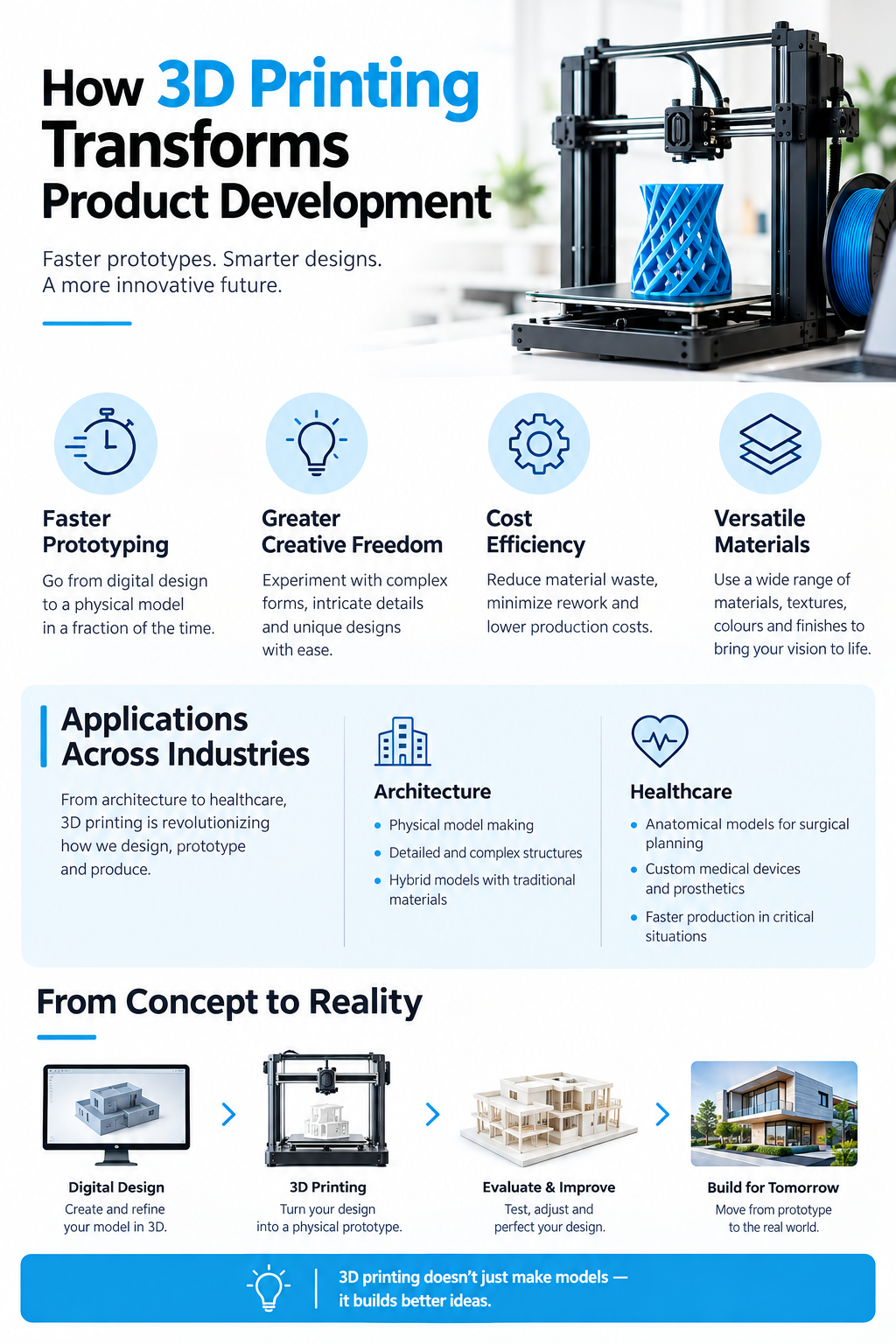
The versatility of 3D printing materials means architects can experiment with various textures, colors, and finishes, reflecting their design intent more accurately. Firms can combine 3D-printed elements with traditional materials to enhance aesthetic and structural qualities, resulting in hybrid models that effectively communicate key design features while remaining affordable
In recent projects, our team has focused on utilizing 3D printing to bring historical structures to life, such as the iconic Golden Lane Estate in London. For this initiative, we printed detailed models replicating unique architectural features, ensuring consistency and precision, which allows for deeper analysis and an appreciation of architectural heritage.
Moreover, recent collaborations have resulted in substantial research and development funding aimed at helping architects control immersive presentation tools, further emphasizing the integration of physical and digital workflows in architectural practice This merging of technologies not only enhances design communication but also empowers architects to explore innovative methodologies, thereby revolutionizing prototyping and production in the industry.
3D Printing in Healthcare: Innovations in Medical Prototyping and Device Production
Healthcare is rapidly evolving, and 3D printing plays a critical role in driving innovation within this sector. By creating detailed medical prototypes, professionals can develop and refine complex devices and solutions without the high costs and time associated with traditional manufacturing methods. For instance, the ability to produce specific anatomical models enables surgeons to practice and plan for intricate procedures, ultimately improving outcomes for patients.
Moreover, the customization aspect of 3D printing allows for the fabrication of tailored medical devices that meet the unique needs of individual patients. This technology enables the production of prosthetics and orthopedic implants that fit perfectly based on a patient’s specific dimensions, enhancing comfort and functionality.
In addition to streamlining prototyping processes, 3D printing facilitates rapid production of medical devices when time is of the essence. It can significantly reduce the lead time from design to production, which is crucial in emergency situations where every second counts. With versatile materials and advanced printing methods, healthcare providers can quickly adapt their responses based on immediate requirements.
As the technology continues to mature, we can expect even greater advancements in 3D printing applications within healthcare, heralding new possibilities for innovation in medical device design and patient care.
The Role of 3D Printing in Architectural Modelmaking: From Concept to Reality
In the architectural model-making realm, 3D printing plays a vital role by allowing architects to bring their designs from concept to a tangible reality. This technology excels in the prototyping phase, enabling designers to visualize and refine their ideas before they become actual buildings. Unlike traditional methods, which can be time-consuming, 3D printing offers a faster and more cost-effective way to produce models, allowing architects to focus on creativity rather than manufacturing limitations.
Take, for instance, the collaboration between Fixie3D and Corstorphine Wright + O’Brien Architects. When they needed to illustrate their innovative approach to modular construction in Ireland, they turned to 3D printing. The architects had four different modular unit designs they wanted to showcase, all of which required removable roofs to display their internal layouts effectively. The project aimed to communicate the benefits of modular construction, highlighting how this approach can meet the housing demands in urban settings efficiently.
To create these models, Fixie3D employed a robust resin printing process that resulted in smooth, detailed, and semi-transparent parts. However, the complexity of the design posed certain challenges. For instance, to achieve an even finish on the models, designers had to account for the way furniture would obscure certain areas during the spraying process. This meant that thoughtful model design was essential—splitting the design into manageable parts to focus on each section's finishing without compromising the model's integrity.
In addition, 3D printing requires that the digital models be optimized for production. Fixie3D ensured that architectural elements, like door frames and windows, were thickened for durability during the printing process. The aim was to create a model that not only looked good but was also a functional representation of the intended design. This involved merging separate components into a single shell for more straightforward printing, which is crucial for the structural integrity of the finished product.
Fixie3D’s meticulous approach also addressed potential issues with uncured resin trapped inside hollow parts. They devised a solution by creating small drainage holes to remove any excess material, ensuring that the final model met the highest standards. After an overnight printing cycle, the models underwent finishing steps, including washing, curing, and spray finishing, culminating in visually striking prototypes that could effectively communicate the architectural vision.
The entire process resulted in high-quality models achieved for a production cost of approximately £325 (€375) each, which is a reasonable investment for high-fidelity architectural prototypes. Additionally, options for full-color models exist through advanced printing technologies, providing even more opportunities for architects to present their designs in the most appealing manner possible
.
Exploring 3D Printing’s Impact on the Automotive Industry: Streamlining Production Processes
The automotive industry has rapidly embraced 3D printing as a means to enhance production processes and innovate design. With the ability to prototype quickly and efficiently, automotive manufacturers are able to test and refine designs in real-time. This flexibility not only helps in reducing development times but also allows for the creation of complex geometries that traditional manufacturing methods cannot achieve. For instance, companies have utilized 3D printing to produce lightweight components, which contribute to improved fuel efficiency and performance in vehicles.
Moreover, 3D printing enables the creation of customized parts at a fraction of the cost and time previously required. This is particularly beneficial for producing low-volume parts or unique components tailored to specific models, allowing manufacturers to respond swiftly to market demands. In this landscape, the shift toward digital inventory systems powered by 3D printing technology is transforming how auto manufacturers think about production and supply chain management. By reducing reliance on traditional supply chains, automakers can decrease lead times and inventory costs, streamlining overall operations.
As the automotive sector continues to evolve, the integration of 3D printing stands as a testament to how innovation can redefine production methodologies, offering significant benefits in both efficiency and creativity.
Sustainability Meets Innovation: 3D Printing Solutions in the Construction Industry
The construction industry is witnessing a transformative shift with the integration of 3D printing technology. This innovation not only streamlines traditional building methods but also promotes sustainability by reducing waste and optimizing materials. Through additive manufacturing, 3D printing allows for the creation of intricate designs that were previously impossible or prohibitively expensive to achieve. Construction firms can leverage this technology to produce structures directly from digital models, which significantly cuts down the time and labor involved in the prototyping phase.
Additionally, the materials used in 3D printing can be sustainable, often utilizing recycled or eco-friendly resources. By adjusting designs to minimize raw material use and employing techniques that reduce excess, the industry is making strides toward greener practices. This synergy between sustainability and innovation is crucial; it not only supports regulatory compliance but also reflects a growing consumer demand for environmentally responsible construction solutions.
As the construction sector embraces these advancements, it becomes evident that 3D printing is not merely a trend but a pivotal tool for achieving efficiency and sustainability. A forward-thinking approach combines these factors to tackle challenges head-on, ensuring that the industry not only builds for today but lays the groundwork for a more sustainable future.
Custom 3D Printing for Creative Industries: Enhancing Character and Commercial Modelmaking
The creative industries are experiencing a revolution thanks to custom 3D printing, which facilitates the development of intricate character designs and commercial models. Artists and designers, who often work within tight timelines and budgets, find 3D printing to be an essential tool. By allowing for rapid prototyping, this technology helps bring concepts to life with precision and speed. Whether it’s a unique toy figure or a detailed architectural model, the ability to iterate designs quickly enables creators to refine their work without the usual constraints of traditional manufacturing methods.
For instance, the use of 3D printing in modelmaking helps artists experiment with shapes and materials that would otherwise be cost-prohibitive or technically challenging. This capability not only enhances creativity but also offers an opportunity for personalization, allowing for designs that truly reflect the vision of the creator. The commercial aspect of this printing opens doors for small businesses and independent creators, enabling them to produce limited runs of custom items that cater to niche markets. With varied material choices—from flexible plastics that mimic fabric to durable composites—makers can push the boundaries of their designs without sacrificing quality or functionality.
Future Trends: The Continued Evolution of 3D Printing Across Industries
As we look ahead, the trajectory of 3D printing continues to reshape various industries. Companies are increasingly recognizing the advantages of this technology, not just for prototyping but also for production. For instance, in the automotive sector, manufacturers are utilizing 3D printing for creating complex parts that are both lightweight and strong, enhancing overall vehicle efficiency and performance.
Moreover, healthcare is experiencing a remarkable transformation thanks to 3D printing. Custom prosthetics and dental implants can now be tailor-made to fit individual patients, significantly improving comfort and functionality. The ability to create these personalized items on demand means that the healthcare industry can respond faster to patient needs, which is particularly critical in urgent care situations.
In the realm of construction, we’re seeing the emergence of 3D printed structures—an innovation that promises to lower costs and shorten project timelines. By utilizing 3D printing technologies, builders can rapidly produce components or even entire homes, addressing the ongoing demand for affordable housing without compromising quality.
As these applications illustrate, the future of 3D printing is not just promising; it is actively evolving. The integration of this technology into various sectors signals a movement toward more efficient, customized, and sustainable production methods, showing that the possibilities are only beginning to unfold.